|
|
|---|
Showing posts with label ferrari. Show all posts
Tuesday, October 18, 2011
Because it's worth it - 1957 Ferrari 250 Testa Rossa
THERE IS NOTHING like a ringside seat at a prizefight, watching heavyweights duke it out. Especially when it is a civilised affair, with an elegantly appointed dark-suited referee named Charlie using his mellifluous voice, soothing accent and dry wit to cajole the combatants to hit each other harder. With their chequebooks.
A riveting, record-breaking slugfest took place on the evening of Saturday 20 August on California's picturesque Monterey peninsula when Gooding & Company sold Ferrari 250 Testa Rossa chassis number 0666 TR at its Pebble Beach auction (see News and Market News). The opening bid of $5,000,000 was met by a quick $10,000,000 counterbid, and it went from there. The $14,900,000 hammer price numerous tense minutes later translated into an 'all in' price of $16,390,000, when the buyer's premium had been added.
That 16-plus figure established a new world record for a car sold at auction, shattering the old record by some $4 million. Which got much of the collector car world wondering: was that telephone book-type number justifiable? Or had more than one of Gooding's very deep-pocketed paddle holders taken too many sips of auction/Pebble Beach week Kool Aid and bid the Ferrari up far beyond what it is worth?
To ascertain an answer, we'll start with an overview of the car's provenance. Chassis 0666 TR was originally constructed at the Ferrari factory and Carrozzeria Scaglietti in May 1957, the car's underpinnings and appearance following 290MM specs. Shortly thereafter it raced at the 'Ring (tenth overall) and Sweden (DNF, blown engine), after which it returned to Maranello. According to Joel Firm's definitive Ferrari Testa Rossa V-12, 0666 TR was converted into the first ever Testa Rossa and given the now-iconic pontoon fender configuration by Scaglietti. It then competed in Venezuela (third), Argentina (early 1958, second), and the Targa Florio (DNF). It was then sold to Luigi Chinetti.
America's influential distributor took the Ferrari to Le Mans, where it ran fourth before catching fire. The badly burnt car returned to Maranello, where it was completely rebuilt by Ferrari, and received a new pontoon fender body at Scaglietti. It then raced at international venues such as Sebring, the 'Ring and Le Mans before settling into a successful career in California.
By the mid-1960s its glory days were over, the car having been piloted by many of the era's greats: Gendebien, Gurney, Hill, Gregory and Von Trips, to name a few. In the late 1960s the owner set the interior on fire to collect insurance money; the rest of the car remained relatively unscathed, according to a knowledgeable person who saw post-fire period photos. The TR was then bought by two southern California college professors who have likely owned more great Ferraris than just about anyone, and they eventually restored it and kept it until 2002, when it was bought by its last owner.
This genuine enthusiast and his wife have one of the world's great collections, with a Pebble Beach winner to their credit. TR 0666 underwent a complete restoration over an 18-month period, subsequently won its class at Pebble, scored platinum (95 points or higher) at several Ferrari Club of America events, garnered a number of awards, and received a Ferrari Classiche certification that states the engine, body and chassis are original to the car.
If all that history, restoration and those awards weren't enough to catch my attention, a number of years ago during a conversation with the coachbuilder Sergio Scaglietti, I asked if he had a favourite from his prolific career, or took time to admire any of his creations before they went out the door. 'Yes,' he replied, naming Tonly one car, 'the first Testa Rossa. It was beautiful, as I would see different characteristics when I looked at it.'
That is exceptional praise, coming from a man whose resume also includes the 250 Spider California, the Series I GTO, and 20 other pontoon fender TRs.
Even so, and despite that record-setting price, auctioneer David Gooding feels this landmark prototype remains undervalued. 'Compared with a GTO, TRs won Le Mans outright; the GTO only its class,' he says. 'It is 40% rarer than a GTO, and absolutely epitomises what Ferrari is about. It is outrageous, beautiful, sensual, loud, raucous and victorious. The TR has everything a GTO has, and more. It is the car that truly created Ferrari's reputation.'
Normally I would dismiss such talk as classic auctioneer post¬sale puffery, but just over two years ago I drove the previous price record holder, 250 Testa Rossa chassis 0714 (see Octane issue 70). Model history and cool looks aside, just minutes into those memorable several hours it became more than clear that the 250GTO no longer occupied its longstanding position as my 'greatest car I have ever driven' mantle.
Chassis 0666 - and almost every other TR - also possess another, often overlooked asset: the ability to get into any automotive event without a second thought. This subject was covered in depth in The A-list (see Octane issue 98), but even such rarefied air has its own pecking order. You can quibble over whether a 250TR - let alone the prototype - sits on the 'A' or 'A-' tier of the A-list (think Alfa 8C 2900, Mercedes 300SLR, Bugatti Atlantic and the aforementioned 250GTO as top-tier shoo-ins). But it is way, way up there, wherever it ultimately resides.
So 0666 is a unique passport that lets the owner travel to some of the world's most beautiful and exotic locations, enjoying their piece of rolling sculpture while there. And these days, with the proliferation of more high-end and exclusive concours, rallies and races, that guaranteed entry card across a range of venues is a big selling point - one that adds value by broadening the potential audience of those interested in being its next custodian, let alone anyone fortunate enough to see it at such events.
Then there is die subtle but widening movement of 'cars as art'. For Gooding, the term 'rolling sculpture' is quite apt, especially in light of increasing values. 'With cars like this Ferrari,' he says, 'potential owners are more likely to look at them as an alternative investment to traditional artwork.' Exhibitions such as Ralph Lauren's cars (including his pontoon fender Testa Rossa), first seen at the Boston Museum of Modern Art and now the Musée des Arts Decoratifs in Paris, bear this out. In a sophisticated setting the rarity, historical significance and aesthetic beauty of cars are highlighted for cultural tastemakers, the well-heeled and general populace the world over to see.
Two emerging trends are further influencing prices. For better or worse, the collector car hobby is no longer that; it is now the collector car industry. Private, corporate and public money is piling into the arena, bringing ever more visibility to what we love. That higher profile attracts more people worldwide, and a car publicly selling for just short of $16.4 million does nothing to slow that down. All of which leads into a second trend that may be fingernails on a chalkboard to some: in the words of a serious longtime collector who made his fortune on Wall Street, cars have become an 'asset class'.
He's right. During the past couple of years I have frequently used the words 'asset diversification' when speaking about the demand for high-end collector cars, and Gooding's sale marked the first auction at which I was scared by what I saw. A good number of sales didn't make sense as cars went for amounts way in excess of their intrinsic value. During the Monterey Car Week Gooding wasn't alone - RM (especially with the $1.375 million McQueen 911) and others also rang the proverbial bell.
This 'asset class' perception will accelerate, and is likely the reason why perceived intrinsic values have skewed. Over the past decade the stock market has gone nowhere, real estate has been hit hard, and US and European central banks are continually printing money, devaluing currencies. US Government debt was downgraded by one rating agency, and there has been more than one run on Greek bonds.
According to the treatise This Time Is Different, eight centuries of economic history says without exception that the Wesfs current debt levels are unsustainable without a massive devaluation or default. In times of uncertainty like now, the wealthy often put their money in hard assets - witness gold's stealthy ten-year bull market that only recently has been noticed by the mainstream and financial press. And this is affecting another form of precious metal: collector cars, especially at the highest levels. Not only are cars such as 0666 now an asset class, like gold they are a type of currency. They can be moved anywhere in the world, and have a recognised value with a global demand to back it up. A 250 Testa Rossa may not be the most liquid currency, but there will always be buyers for 0666.
Which returns us to our original question: was the $16.39 million price too much? In short, the answer is no; prior to the sale, I thought it would go for $17 million, possibly higher. Had there been greater pre-auction clarity on the damage done by the late-1960s fire (more than one person I spoke to thought 0666 was a rebody, and not carrying original Scaglietti coachwork), it may have brought more.
Huge intrinsic value - not to mention an incredible adrenalin pump, too - resides in those taut, meticulously restored pontoon fenders. The 250TR remains the greatest car I have driven, and it defines the increasingly recognisable term 'rolling sculpture'. This particular chassis served as the starting point of a multiple- championship and Le Mans winning model line from perhaps the greatest constructor of all, making the 250 Testa Rossa one of the true highpoints of automotive history. And let's not forget the social and economic tailwinds that will probably push its value higher in the future.
But the best part of this saga has nothing to do with values, or economics. When I saw the car's previous owner on the lawn at Pebble Beach less than 18 hours after the sale, I asked him why he sold it. 'I just wasn't using it any more,' he replied. 'We had the fun and satisfaction of restoring it, and it won numerous awards. I raced it and enjoyed it, but I just didn't drive it any more.'
Then he smiled and said: 'I have a Maserati 300S that is nearly as sweet and even more forgiving at the limit, and its value is less than half the Testa Rossa's.'
For more cars info check Cars VW
Article Source: http://www.articlesbase.com/classics-articles/because-its-worth-it-1957-ferrari-250-testa-rossa-5302139.html
About the Author
Author: Gold Movies
A riveting, record-breaking slugfest took place on the evening of Saturday 20 August on California's picturesque Monterey peninsula when Gooding & Company sold Ferrari 250 Testa Rossa chassis number 0666 TR at its Pebble Beach auction (see News and Market News). The opening bid of $5,000,000 was met by a quick $10,000,000 counterbid, and it went from there. The $14,900,000 hammer price numerous tense minutes later translated into an 'all in' price of $16,390,000, when the buyer's premium had been added.
That 16-plus figure established a new world record for a car sold at auction, shattering the old record by some $4 million. Which got much of the collector car world wondering: was that telephone book-type number justifiable? Or had more than one of Gooding's very deep-pocketed paddle holders taken too many sips of auction/Pebble Beach week Kool Aid and bid the Ferrari up far beyond what it is worth?
To ascertain an answer, we'll start with an overview of the car's provenance. Chassis 0666 TR was originally constructed at the Ferrari factory and Carrozzeria Scaglietti in May 1957, the car's underpinnings and appearance following 290MM specs. Shortly thereafter it raced at the 'Ring (tenth overall) and Sweden (DNF, blown engine), after which it returned to Maranello. According to Joel Firm's definitive Ferrari Testa Rossa V-12, 0666 TR was converted into the first ever Testa Rossa and given the now-iconic pontoon fender configuration by Scaglietti. It then competed in Venezuela (third), Argentina (early 1958, second), and the Targa Florio (DNF). It was then sold to Luigi Chinetti.
America's influential distributor took the Ferrari to Le Mans, where it ran fourth before catching fire. The badly burnt car returned to Maranello, where it was completely rebuilt by Ferrari, and received a new pontoon fender body at Scaglietti. It then raced at international venues such as Sebring, the 'Ring and Le Mans before settling into a successful career in California.
By the mid-1960s its glory days were over, the car having been piloted by many of the era's greats: Gendebien, Gurney, Hill, Gregory and Von Trips, to name a few. In the late 1960s the owner set the interior on fire to collect insurance money; the rest of the car remained relatively unscathed, according to a knowledgeable person who saw post-fire period photos. The TR was then bought by two southern California college professors who have likely owned more great Ferraris than just about anyone, and they eventually restored it and kept it until 2002, when it was bought by its last owner.
This genuine enthusiast and his wife have one of the world's great collections, with a Pebble Beach winner to their credit. TR 0666 underwent a complete restoration over an 18-month period, subsequently won its class at Pebble, scored platinum (95 points or higher) at several Ferrari Club of America events, garnered a number of awards, and received a Ferrari Classiche certification that states the engine, body and chassis are original to the car.
If all that history, restoration and those awards weren't enough to catch my attention, a number of years ago during a conversation with the coachbuilder Sergio Scaglietti, I asked if he had a favourite from his prolific career, or took time to admire any of his creations before they went out the door. 'Yes,' he replied, naming Tonly one car, 'the first Testa Rossa. It was beautiful, as I would see different characteristics when I looked at it.'
That is exceptional praise, coming from a man whose resume also includes the 250 Spider California, the Series I GTO, and 20 other pontoon fender TRs.
Even so, and despite that record-setting price, auctioneer David Gooding feels this landmark prototype remains undervalued. 'Compared with a GTO, TRs won Le Mans outright; the GTO only its class,' he says. 'It is 40% rarer than a GTO, and absolutely epitomises what Ferrari is about. It is outrageous, beautiful, sensual, loud, raucous and victorious. The TR has everything a GTO has, and more. It is the car that truly created Ferrari's reputation.'
Normally I would dismiss such talk as classic auctioneer post¬sale puffery, but just over two years ago I drove the previous price record holder, 250 Testa Rossa chassis 0714 (see Octane issue 70). Model history and cool looks aside, just minutes into those memorable several hours it became more than clear that the 250GTO no longer occupied its longstanding position as my 'greatest car I have ever driven' mantle.
Chassis 0666 - and almost every other TR - also possess another, often overlooked asset: the ability to get into any automotive event without a second thought. This subject was covered in depth in The A-list (see Octane issue 98), but even such rarefied air has its own pecking order. You can quibble over whether a 250TR - let alone the prototype - sits on the 'A' or 'A-' tier of the A-list (think Alfa 8C 2900, Mercedes 300SLR, Bugatti Atlantic and the aforementioned 250GTO as top-tier shoo-ins). But it is way, way up there, wherever it ultimately resides.
So 0666 is a unique passport that lets the owner travel to some of the world's most beautiful and exotic locations, enjoying their piece of rolling sculpture while there. And these days, with the proliferation of more high-end and exclusive concours, rallies and races, that guaranteed entry card across a range of venues is a big selling point - one that adds value by broadening the potential audience of those interested in being its next custodian, let alone anyone fortunate enough to see it at such events.
Then there is die subtle but widening movement of 'cars as art'. For Gooding, the term 'rolling sculpture' is quite apt, especially in light of increasing values. 'With cars like this Ferrari,' he says, 'potential owners are more likely to look at them as an alternative investment to traditional artwork.' Exhibitions such as Ralph Lauren's cars (including his pontoon fender Testa Rossa), first seen at the Boston Museum of Modern Art and now the Musée des Arts Decoratifs in Paris, bear this out. In a sophisticated setting the rarity, historical significance and aesthetic beauty of cars are highlighted for cultural tastemakers, the well-heeled and general populace the world over to see.
Two emerging trends are further influencing prices. For better or worse, the collector car hobby is no longer that; it is now the collector car industry. Private, corporate and public money is piling into the arena, bringing ever more visibility to what we love. That higher profile attracts more people worldwide, and a car publicly selling for just short of $16.4 million does nothing to slow that down. All of which leads into a second trend that may be fingernails on a chalkboard to some: in the words of a serious longtime collector who made his fortune on Wall Street, cars have become an 'asset class'.
He's right. During the past couple of years I have frequently used the words 'asset diversification' when speaking about the demand for high-end collector cars, and Gooding's sale marked the first auction at which I was scared by what I saw. A good number of sales didn't make sense as cars went for amounts way in excess of their intrinsic value. During the Monterey Car Week Gooding wasn't alone - RM (especially with the $1.375 million McQueen 911) and others also rang the proverbial bell.
This 'asset class' perception will accelerate, and is likely the reason why perceived intrinsic values have skewed. Over the past decade the stock market has gone nowhere, real estate has been hit hard, and US and European central banks are continually printing money, devaluing currencies. US Government debt was downgraded by one rating agency, and there has been more than one run on Greek bonds.
According to the treatise This Time Is Different, eight centuries of economic history says without exception that the Wesfs current debt levels are unsustainable without a massive devaluation or default. In times of uncertainty like now, the wealthy often put their money in hard assets - witness gold's stealthy ten-year bull market that only recently has been noticed by the mainstream and financial press. And this is affecting another form of precious metal: collector cars, especially at the highest levels. Not only are cars such as 0666 now an asset class, like gold they are a type of currency. They can be moved anywhere in the world, and have a recognised value with a global demand to back it up. A 250 Testa Rossa may not be the most liquid currency, but there will always be buyers for 0666.
Which returns us to our original question: was the $16.39 million price too much? In short, the answer is no; prior to the sale, I thought it would go for $17 million, possibly higher. Had there been greater pre-auction clarity on the damage done by the late-1960s fire (more than one person I spoke to thought 0666 was a rebody, and not carrying original Scaglietti coachwork), it may have brought more.
Huge intrinsic value - not to mention an incredible adrenalin pump, too - resides in those taut, meticulously restored pontoon fenders. The 250TR remains the greatest car I have driven, and it defines the increasingly recognisable term 'rolling sculpture'. This particular chassis served as the starting point of a multiple- championship and Le Mans winning model line from perhaps the greatest constructor of all, making the 250 Testa Rossa one of the true highpoints of automotive history. And let's not forget the social and economic tailwinds that will probably push its value higher in the future.
But the best part of this saga has nothing to do with values, or economics. When I saw the car's previous owner on the lawn at Pebble Beach less than 18 hours after the sale, I asked him why he sold it. 'I just wasn't using it any more,' he replied. 'We had the fun and satisfaction of restoring it, and it won numerous awards. I raced it and enjoyed it, but I just didn't drive it any more.'
Then he smiled and said: 'I have a Maserati 300S that is nearly as sweet and even more forgiving at the limit, and its value is less than half the Testa Rossa's.'
For more cars info check Cars VW
Article Source: http://www.articlesbase.com/classics-articles/because-its-worth-it-1957-ferrari-250-testa-rossa-5302139.html
About the Author
Author: Gold Movies
Sunday, August 28, 2011
Carros de História: Ferrari Enzo
O nome já dizia tudo, a Ferrari Enzo veio para detonar. O carro que tinha o nome do criador da "marca do cavalo", Enzo Anselmo Ferrari, foi construído com tecnologia inspirada na dos Fórmula 1. Há também um sistema de aerodinâmica que levanta um pequeno spoiler em alta velocidade, criando sustentação para não descolar.
A Ferrari Enzo foi lançada em 2002 no Salão de Paris com um motor 6.0 V12 48V. Alcançava a velocidade máxima de 350 km/h e ia de 0-100 km/h em 3,7 segundos.
O carro era apenas uma versão especial, mas a Ferrari acabou levando o carro à sério e fez com o objetivo de concorrer diretamente com o Lamborghini Murciélago. Em 2004, a Sports Car International colocou o carro em 3º lugar no ranking dos melhores carros esportivos dos anos 2000. Perdeu apenas para o Lambo Murciélago LP640 (1º) e Porsche Carrera GT (2º).
Foram fabricadas apenas 349 unidades da Enzo. Mas colecionadores de Ferraris reclamaram e, a Ferrari fabricou mais 50 unidades, aumentado o total de unidades para 399. Na época de seu lançamento, o carro custava US$ 700.000.
O carro saiu de linha em 2004.
A Ferrari Enzo foi lançada em 2002 no Salão de Paris com um motor 6.0 V12 48V. Alcançava a velocidade máxima de 350 km/h e ia de 0-100 km/h em 3,7 segundos.
O carro era apenas uma versão especial, mas a Ferrari acabou levando o carro à sério e fez com o objetivo de concorrer diretamente com o Lamborghini Murciélago. Em 2004, a Sports Car International colocou o carro em 3º lugar no ranking dos melhores carros esportivos dos anos 2000. Perdeu apenas para o Lambo Murciélago LP640 (1º) e Porsche Carrera GT (2º).
Foram fabricadas apenas 349 unidades da Enzo. Mas colecionadores de Ferraris reclamaram e, a Ferrari fabricou mais 50 unidades, aumentado o total de unidades para 399. Na época de seu lançamento, o carro custava US$ 700.000.
O carro saiu de linha em 2004.
![]() |
| O design da Ferrari Enzo era inspirado no dos F1... |
![]() |
| ...os vincos do capô dizem tudo. |
![]() |
| O carro era muito flexível e rápido. |
![]() |
| Vai de 0-100 km/h em 3,7 segundos. |
![]() |
| Duas Ferraris: F2002 e Enzo. |
![]() |
| Primeiro sketch da Ferrari Enzo 2002. |
![]() |
| Segundo sketch, com mais detalhes. |
Thursday, August 25, 2011
Tuesday, August 23, 2011
Ferrari mostra 458 Italia Spider
![]() |
| Roadster concorrerá com M.Benz SLS AMG Roadster. |
O carro tem motor 4.5 V8 de 562 cv, e 54 mkgf de torque. O roadster vai de 0 a 100 km/h em 3,4 segundos e vai até 320 km/h de velocidade máxima. A transmissão é automática de dupla embreagem, inspirada nos carros de Fórmula 1.
Segundo a "marca do cavalo", o teto rígido retrátil é recolhido em apenas 14 segundos. Ainda mais, pesa 25 kg a menos que a capota de tecido da F430 Spider. A 458 Spider concorre com a MB SLS AMG Roadster, e concorrerá também com a Aventador Roadster, que poderá ser apresentada em Frankfurt.
A Ferrari divulgou ainda um vídeo de seu novo carro. Confira!
Labels:
Cupês,
ferrari,
Opções,
Salão de Frankfurt 2011,
Vídeos
FERRARI 458 ITALIA SPIDER É REVELADA
A Ferrari revelou as primeiras imagens oficiais da 458 Italia Spider, três semanas antes de mostrar publicamente o bólido no motorshow de Frankfurt, que será realizado na Alemanha entre os dias 15 e 25 de setembro. A máquina será equipada com um propulsor V8 de 4.5 litros, capaz de desenvolver 562 cv de potência, e estará disponível para venda no início de 2012.
Trata-se do primeiro esportivo de motor central-traseiro do “cavallino rompante” a contar com capota rígida retrátil. Construída de alumínio, a estrutura é recolhida de forma automática em apenas 14 segundos, e pesa 55 kg a menos que a capota de tecido de sua antecessora, a F430 Spider – o que fez com que a 458 Italia Spider mantivesse a mesma proporção de distribuição de peso que o modelo de teto fixo.
De acordo com a Ferrari, a estrutura rígida foi desenvolvida para ficar armazenada em um compartimento na frente do motor, sem comprometer a aerodinâmica ou o desempenho do conjunto mecânico. A traseira conta ainda com defletores de ar que auxiliam a passagem de vento para as entradas que resfriam o motor. O superesportivo utiliza a caixa automatizada de dupla embreagem que a Ferrari emprega na Fórmula 1, e possui ainda controle de tração e sistema de freios de alto desempenho também utilizados na competição.
Wednesday, May 25, 2011
ferrari 612 scaglietti | ferrari 612 scaglietti price | ferrari 612 scaglietti specs | ferrari 612 scaglietti automatic
ferrari 612 scaglietti
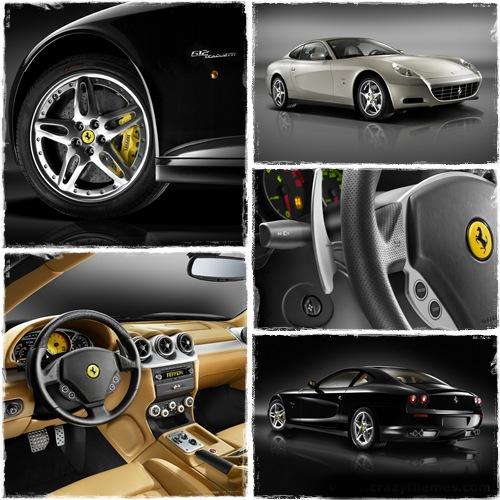
Ferrari 612 Scaglietti is Ferrari four seats, two door grand tourer coupe. Made for a road trip in length, while designed to look stylish and full of high performance you'd expect from Ferrari. Ferrari 612 Scaglietti is the top line, luxury cars of high performance with every comfort and luxury that can be packaged Ferrari Spaghetti 116.1-inch wheelbase. Performance and efficiency is no problem with Ferrari's 612th Powered by Dino Ferrari Tipo F116B 5.7 liter, V12 engine, producing 530HP and the highest top speed of 196 mph.
ferrari 612 scaglietti replacement
Transmission is either a 6-speed manual gearbox, 6 speed F1a or semi-automatic transmission with paddle shift system, which is attached to the steering and easily accessible because it is directly behind the wheel. Both transmissions offer superior performance and high yield, which is famous for Ferrari. Along with the V12, which gives better performance high performance, and four cars, weighing just over £ 3.800. The interior is beautifully soft leather seating with sleek, stylized aircraft instrumentation. It also provided enough space for two front seats and two adult passengers quite comfortably on the back.
ferrari 612 scaglietti pictures
Find the Ferrari 612 Scaglietti for sale is difficult, because most owners find farewell to this special vehicle is difficult at best, but if you're really lucky to find the true high performance car lover will be in heaven . Ferrari 612 Scaglietti produced since 2004, and has a few special edition in 2007 as the 60th anniversary editions were only 60, which is a special unit of production 20 commemorating the 30th Anniversary Corne & Company Ferrari imports to Japan and even police units in 2007. If you look at the Ferrari 612 Scaglietti for sale, you'll also equally impressed by Ferrari Scaglietti is all aluminum vehicle.
Grab The Bookmarketer For Your Site
Labels:
ferrari
Monday, May 16, 2011
2011 ferrari enzo | 2011 ferrari enzo price | 2011 ferrari enzo specs |new ferrari enzo 2011 price
ferrari enzo 2011
Ferrari always used the courts to test new concepts, cars and technology in their racecars, and after a few years these cars and technologies came on the roadside. So is a new Ferrari Enzo, a pure sports car named after Ferrari founder - Enzo Ferrari. He felt that the best sports cars are created from racing. New Enzo has its technology from F1 racing. Were used advanced composite materials for the bodywork.
picture ferrari
Some parts are made from carbon fiber and Nomex sandvich panels. These materials helped the designers to create stunning style, while being able to keep his weight to a minimum. Aero dynamics were made to meet strict criteria to maintain the very high top speed of 350 km / h or more, so they had to raise downforce of the car. Enzo engine has 12 cylinders with a capacity of 5998 cc. The objectives of this engine was completely satisfied and now that gives a combination of high power and torque from low speeds.
ferrari for sale
It is possible to observe a power outside 110bhp/litre engine. The Enzo chassis is constructed of carbon fiber and aluminum ridigity panels.Torsion sandwich proved to be higher than the weight of the chassis targeted.Also dropped considerably to 92 kg. Compared with the previous model compound F50 was 102 kg. The new Ferrari Enzo got independent rear and front suspension with double wish-bone geometries and adaptive created. The braking system is Brembo.
Grab The Bookmarketer For Your Site
Thursday, May 5, 2011
FERRARI 612 SCAGLIETTI CHEGA AO FIM

Se você tivesse que descrever a Ferrari 612 Scaglietti para alguém, ela se pareceria com o carro perfeito: motor V12 frontal/central, câmbio e diferencial na traseira para ótima distribuição de peso, carroceria em alumínio rígida e leve, quatro lugares, bom porta-malas, amortecedores ativos, máxima que pode chegar aos 325 km/h, design Pininfarina e o emblema Ferrari no capô. E que nome! “Que carro é esse”? Uma 612 Scaglietti!
Então por que a recepção tão fria no seu lançamento em 2003? Bem, não está exatamente entre as melhores criações do estúdio Pininfarina. A 612 tem estilo duvidoso e suas laterais em forma de concha são inspiradas na linda 375 MM de 1954, feita especialmente para a atriz Ingrid Bergman por Scaglietti, mas cuja beleza não se traduz para a atual. Ela certamente teria mais apelo se fosse baseada em outra linda criação, a 456M GT. No entanto, a 612 Scaglietti deu um enorme salto técnico. O motor V12 5.7 l Tipo 133F era o canto do cisne, antes do motor derivado da Enzo entrar na 599 GTB.
Com 533 cv (98 cv a mais que a 456M GT) e 60 kgfm de torque ele permite que a Scaglietti vá de 0 a 100 km/h em 4.2 s. Muitos compradores optaram pelo câmbio automático F1 A com opção para trocas nas borboletas. O 6 marchas manual era bem melhor. Seja qual for o câmbio, o espaço interno é muito bom para quatro adultos, a dirigibilidade e conforto eram excelentes graças aos amortecedores variáveis e a linda curva de potência que só um V12 pode proporcionar.
A 612 é um carro grande e não faz questão de esconder isso. O painel é simples, o volante tem o tamanho correto e traz nele controles de condução, estabilidade e dois botões que controlam a navegação na tela de cristal líquido à esquerda do motorista, junto do tradicional conta-giros central.
Vire a chave e o V12 dá um grito ao ligar, antes de acalmar-se em marcha lenta. O carro é ótimo de conduzir, graças a seu entre-eixos longo e pelo motor, que já mostra disposição mesmo em baixos regimes. Ele parece perfeito como aqueles carros que sonhamos para fazer longas viagens. E eu ainda tive o prazer de conduzir uma desde o Festival de Velocidade de Goodwood, até a fábrica em Maranello, junto de uma 575 Superamerica. Nossa rota incluiu muitas autoestradas, passando por serras sinuosas e interessantes pela França atravessando cordilheiras, até chegarmos a Maranello por estradas épicas.
A 612 foi maravilhosa: rápida, inacreditavelmente ágil, confortável e beberrona... nada é perfeito. Dirigi também a 575 em alguns trechos mas me senti melhor na Scaglietti por ter um conjunto mais harmo-nioso, ser mais bem resolvida. Quando chegávamos a Modena, aproveitamos um trecho propício, onde coloquei 297 km/h nela e deu para perceber que a 612 era tão boa quanto prometia. De repente, achei-a bem mais bonita. No lugar dela, entrou a Ferrari FF.
*Texto escrito por Jethro Bovigdon da CAR Magazine UK
Thursday, March 31, 2011
FERRARI 599 GTB FIORANO RECEBE UPGRADE
Anderson Germany divulgou um pacote de preparação para a Ferrari 599 GTB Fiorano. Com pequenos ajustes no motor, nova pintura preta fosca com detalhes vermelhos, rodas inéditas, novo revestimento interior e body kit discreto, o upgrade da empresa torna o esportivo italiano mais rápido e exclusivo.
Em função de um novo sistema de escape esportivo da própria Anderson Germany, a 599 GTB Fiorano teve o rendimento de seu motor 6.0 V12 elevado dos 620 cavalos de potência para 650 cv. Segundo a preparadora, o acréscimo de 30 cv ajudou a reduzir o tempo de aceleração de 0 a 100 km/h do modelo. A Anderson, porém, não revelou os números.
Originalmente a 599 GTB Fiorano acelera aos 100 km/h em 3s7, atinge os 200 km/h em 11s0 e velocidade máxima “superior a 328 km/h”, segundo a própria Ferrari. O preço das alterações não foi divulgado.
Fonte: Carro Online
Wednesday, March 30, 2011
SEM COMENTÁRIOS - FERRARI 458 ITALIA ADESIVADA (+18)
Atenção: nós não nos responsabilizaremos se você tiver um infarto ao ver as imagens.

É quase impossível de acreditar com o que fizeram com a espetacular 458 Italia!! A moda dos adesivos toscos foscos foi parar também nesta obra de arte sobre rodas (FAIL).
Pra piorar, os retrovisores continuaram vermelhos originais (!), deixando a maquina com visual um tanto estranho, aliás, MUITO estranho.
O PerSa Autos pede desculpas a você que ficou transtornado com as fotos.
Ah, esta bosta beleza está à venda no site Web Motors: http://www.webmotors.com.br/webmotors/carro/usado/ferrari-458-italia-4.5-v8-32v-gasolina-2p-manual--automatizado/6450236/detalhe.wm
*Veja mais curiosidades como esta na página "Sem Comentários"
*Dica de Matheus Zorzato
Labels:
ferrari,
Sem Comentários
Saturday, March 19, 2011
FERRARI FF E LAMBORGHINI AVENTADOR - POR AQUI NO SEGUNDO SEMESTRE
As novas super máquinas Ferrari FF e Lamborghini Aventador que foram apresentadas ao mundo recentemente já estão de malas prontas para o Brasil. Previstas para o segundo semestre, essas belezas não são pra qualquer um.

A FF deverá ter de cinco a oito unidades vendidas este ano, por nada menos que 2,7 milhões de reais. Já a Aventador custará cerca de 2 milhões de reais e deverá ter entre cinco e sete unidades comercializadas este ano.
As duas feras são equipadas com um "modesto" motor V12, a FF com 660 cavalos e a Aventador com 700 cavalos de potência. "Só".
Monday, March 14, 2011
Ferrari
Ferrari S.p.A. is an Italian sports car manufacturer based in Maranello, Italy. Founded by Enzo Ferrari in 1929, as Scuderia Ferrari, the company sponsored drivers and manufactured race cars before moving into production of street-legal vehicles as Ferrari S.p.A. in 1947. Throughout its history, the company has been noted for its continued participation in racing, especially inFormula One, where it has had great success.
Subscribe to:
Posts (Atom)